What to Know Before a Vinyl Window Installation
@9927pkr16q
October 6, 2026 · 8 min read
When I first moved into my old house in North Texas, the windows were the first thing I noticed. They were drafty in the winter, fogged up in the summer, and the frames felt brittle. My neighbor had just finished a vinyl window installation on his place, and the difference was night and day. I called Apex Windows for a free estimate, and that conversation changed how I thought about replacement windows entirely.
Vinyl frames have become the standard for most residential window replacements in the DFW area, and for good reason. They are affordable, energy-efficient, and surprisingly durable when installed correctly. But the installation itself matters just as much as the window unit. I have seen too many jobs where a good window was let down by poor fitting or inadequate sealing. That is why I want to walk through what a proper vinyl window installation actually involves, what to look for in a contractor, and how to avoid the common pitfalls.
Why Vinyl Frames Dominate the Market
Vinyl frames, often made from unplasticized polyvinyl chloride (uPVC), have largely replaced wood and aluminum in modern replacement windows. They do not rot, corrode, or conduct heat the way metal does. For double-hung windows, which are still the most common style in older homes around Dallas and Fort Worth, vinyl frames provide a clean, low-maintenance solution. Brands like Pella, Milgard, and Simonton have all adopted vinyl for many of their product lines, and each has its own take on reinforcement and weatherstripping.
One of the biggest advantages of vinyl is its thermal performance. When combined with Low-E glass and an argon gas fill, a vinyl window can achieve an Energy Star rating that significantly lowers your heating and cooling costs. I remember a job where we replaced aluminum-framed sliders with vinyl double-hungs filled with argon. The homeowner reported a noticeable drop in their summer electric bill within the first two months. That kind of real-world payoff is why so many people choose vinyl for whole-home replacement projects.

The Anatomy of a Good Vinyl Window Installation
There is more to a vinyl window installation than popping a new frame into an old hole. The process starts with accurate measurements. An experienced installer will measure the rough opening at three points: top, middle, and bottom. If the existing frame is out of square, which it often is in older homes, the new unit has to be shimmed and adjusted so it operates smoothly. I have seen installers skip this step, and the result is a window that binds or leaks air.
Next comes the critical step of window flashing. Flashing is a waterproof membrane that directs water away from the window opening. It is especially important in the DFW area, where we get heavy spring rains and occasional hailstorms. A proper flashing installation involves applying a flexible, self-adhering membrane around the rough opening before the window goes in. This step prevents moisture from seeping behind the vinyl frame and causing rot or mold in the wall cavity.
For new construction or full replacements where the old frame is removed, nail fin installation is the most common method. The window has a fin or flange around its perimeter that gets nailed directly into the sheathing. This method creates a strong mechanical fastening, but it requires careful alignment and proper sealing behind the fin. If the nail fin is not caulked correctly, water can travel behind the siding and into the wall. I always advise homeowners to ask their installer whether they use nail fin or block frame installation, and why they chose one over the other for the specific job.
Common Mistakes and How to Avoid Them
Even experienced crews can make mistakes. One of the most frequent issues I encounter is over-tightening the screws or nails that secure the window. Vinyl frames expand and contract with temperature changes. If you fasten them too rigidly, the frame can bow or crack when the weather shifts. A good installer leaves a slight gap at the shims and uses fasteners designed for vinyl, which allow for thermal movement.
Another mistake is failing to properly insulate the gap between the window frame and the rough opening. Many contractors use expanding foam, which is fine, but they either use too little or too much. Too little foam leaves an air gap that reduces the window's overall R-value. Too much foam can push the frame out of square as it cures. The trick is to apply low-expansion foam in a consistent bead, then trim the excess after it hardens. This step is where you really see the difference between a journeyman and a crew that rushes through the job.
Finally, I see a lot of windows that are not properly shimmed at the sill. Double-hung windows rely on a level sill to operate correctly. If the sill slopes inward, water can pool on the interior track. If it slopes outward too aggressively, the sash may not lock securely. A level, solid sill is the foundation of a trouble-free vinyl window installation.
Choosing the Right Glass and Gas Fill
The frame is only half the story. The glass package you choose has a huge impact on comfort and energy savings. Low-E glass has a microscopically thin coating that reflects infrared heat while letting visible light pass through. When combined with an argon gas fill between the panes, the window's insulating value can jump by 30 percent or more. The National Fenestration Rating Council provides certified ratings for U-factor, solar heat gain coefficient, and visible transmittance. I always recommend looking for windows that carry both the NFRC label and an Energy Star rating. These third-party certifications give you confidence that the product will perform as advertised.
For homeowners in the DFW area, where summer heat is intense, a low solar heat gain coefficient is usually the right choice. That means less heat from the sun enters your home, which reduces the load on your air conditioner. But if you have a room that faces north and you want passive solar warmth in the winter, you might choose a glass with a higher solar heat gain. A good window company like Apex Windows can walk you through these trade-offs during a free estimate.
Warranties and What They Cover
Warranties vary widely among manufacturers and installers. Most major brands like Pella, Milgard, and Simonton offer a limited lifetime warranty on the vinyl frame and sash, but the details matter. Some warranties cover only the sealed unit against fogging or glass breakage for a set number of years. Others include the hardware and operator mechanisms. And the installation labor is almost always covered by the installer, not the window manufacturer. That is why it pays to work with a company that backs its work with a clear, written warranty. I have seen too many homeowners assume the brand warranty covers everything, only to find out the installer's poor workmanship voided the coverage.
Before you sign any contract, ask for a copy of both the manufacturer's warranty and the installer's warranty. Look for coverage on seal failure, hardware defects, and frame warping. Also ask about transferability if you plan to sell the home within a few years. A transferable warranty adds real value to the property.
Commercial Glass Services and Larger Projects
Vinyl window installation is not limited to houses. Many commercial glass services now use vinyl frames for storefronts, office partitions, and light commercial buildings. The same principles apply: accurate rough opening, proper flashing, and careful fastening. But commercial jobs often involve larger units, different fire codes, and heavier glass. If you are managing a commercial property in the DFW area, it is worth working with a company that specializes in both residential and commercial glass services. That dual expertise often means they have the right lifting equipment and experience with commercial-grade flashings and sealants.
Foggy Glass Repair and When to Replace
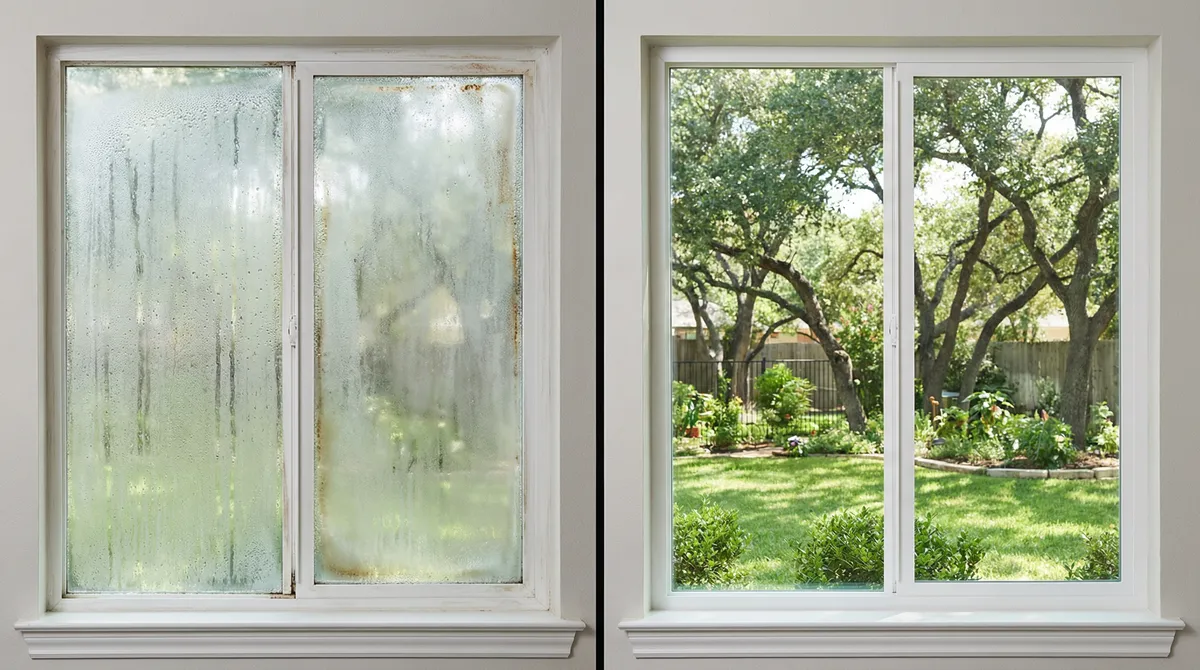
Sometimes a full vinyl window installation is not necessary. If you have existing windows that are structurally sound but the sealed unit has failed, foggy glass repair can be a cost-effective alternative. That is where a technician removes the sash, replaces the insulated glass unit, and reinstalls it in the existing frame. This option works well for historic homes or for windows in good condition where only the glass has failed. But if the frame itself is rotting, warped, or drafty, replacement is almost always the better long-term investment. A good estimator can help you decide which route makes sense for your situation.

Final Thoughts on Hiring a Pro
I have seen vinyl window installation done well and done poorly. The difference almost always comes down to the installer's attention to detail and their understanding of how vinyl behaves in the local climate. Look for a company that is certified by the American Architectural Manufacturers Association or follows AAMA installation standards. Ask for references from jobs similar to yours. And never accept a bid that seems too low, because corners will be cut somewhere. A proper installation takes time, but it pays off in comfort, energy savings, and peace of mind.
For anyone in the DFW area considering replacement windows, I recommend getting at least three free estimates from reputable companies. Ask each one how they handle window flashing, what type of foam they use, and what warranty they provide on labor. If a company cannot answer those questions clearly, move on to the next. The right team will not hesitate to explain their process, show you examples of finished work, and help you choose the best glass and frame options for your home.